10-Tonners: The "Golden Mean" of Spanish Logistics
For Shippers
Vehicles with a 10-ton payload (often called camiones rígidos or solos) are the ideal solution when a van is too small, but a 40-ton articulated lorry is inefficient. Our service provides thousands of offers for these versatile machines.
They are significantly more maneuverable than semi-trailers, making them perfect for deliveries within Spanish city centers and industrial estates with restricted access, while still accommodating a large volume of goods (up to 15-18 Euro-pallets).
Need to move a batch of commercial goods, a large office relocation, or industrial equipment? Find a truck that fits your specific budget.
- Cost Efficiency: Don't pay for unused space in a semi-trailer—book a vehicle that matches your exact cargo volume.
- Loading Convenience: Filter for trucks with a tail lift (trampilla elevadora) for easy loading at sites without a dedicated dock.
- Diverse Body Types: Tautliners (curtain-sides), dry vans, reefers, and open flatbeds for building materials.
- Verified Security: Choose carriers with high ratings and verified documentation to ensure a safe transit.
For Carriers
Operating a 10-ton rigid (MAN, Mercedes-Benz Atego, IVECO Eurocargo)? Keep your cargo bed full with profitable loads.
- Groupage & Partial Loads: Collect grupaje (LTL) along your route to maximize your revenue per kilometer.
- Backloads: Find "retornos" (return loads) from major hubs like Madrid, Barcelona, or Valencia to avoid running empty.
- Smart Search: Sort requests by cubic capacity (30–60 m³) and specific body dimensions.
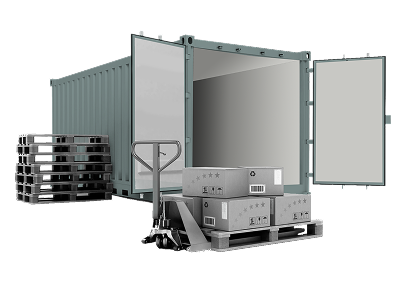
Common 10-Ton Truck Configurations
On Lardi-Trans, users can search for various 10-tonner modifications tailored to specific logistics tasks:
- Curtain-siders (Tautliners): Universal trucks for general cargo with sliding sides and roofs for crane or forklift loading.
- Isothermal & Refrigerated: Essential for transporting food products or pharmaceuticals over medium distances within Spain.
- With Tail Lift: Equipped with a hydraulic lift (trampilla), critical for deliveries to retail stores and street-level warehouses.
- Flatbeds: Open-top bodies for transporting construction materials, pipes, or equipment that is weather-resistant.
FAQ: Frequently Asked Questions About 10-Ton Transport in Spain
How many pallets fit in a standard 10-ton rigid truck?
Depending on the body length (usually 6 to 8 meters), a 10-tonner typically accommodates between 14 and 18 standard Euro-pallets (1200x800). The internal volume usually ranges from 35 to 60 cubic meters. Always confirm exact dimensions with the carrier via the Lardi-Trans chat.
How is the price for 10-ton transport calculated?
The rate per kilometer for a rigid truck is usually lower than for a semi-trailer but higher than for a 3.5-ton van. Pricing depends on the route, cargo weight, and body type (refrigerated units are more expensive). On Lardi-Trans, you can propose your own rate or use the bidding system.
What is a "Rígido" or "Solo" in carrier slang?
In Spain, a camión rígido is a freight vehicle where the cargo body is mounted on the same chassis as the cab (it does not pivot like a tractor-trailer). These 2 or 3-axle trucks are more stable and significantly more maneuverable in narrow urban streets.
Can I specifically find a 10-ton truck with a tail lift?
Yes. The trampilla elevadora is a very common requirement for urban distribution and home moves. In our transport search filters, simply select the "Tail Lift" option to find vehicles that don't require an external forklift or loading ramp.
Does Lardi-Trans provide the trucks directly?
No, Lardi-Trans is a digital aggregator. We provide the marketplace where shippers connect with independent carriers and transport companies. All logistics terms, timelines, and payments are settled directly with the truck owner.
What documents are required for 10-ton transport in Spain?
Standard requirements include the Carta de Porte (Waybill), the driver's professional competence certificate (CAP), and the vehicle's transport license (Tarjeta de Transporte). For refrigerated or hazardous goods, specific health or ADR permits are mandatory.